
The patriarchs are the line of fathers who preserved Adam's way through the generations.
After Abel was slain, Seth was born and walked in the same order. We understand that through Seth's line came Enoch, who walked with God and was translated, and his great grandson Noah, whom God chose to build an ark. These righteous fathers and many others continued living the Order of Adam outside the cities and apart from Cain's way.
These families worshiped at altars, remembered the holy days God had directed, broke bread and drank wine, and sought the presence of God. They lived close to the land and ordered family life around worship, stewardship, and obedience to God.
Adam's way was preserved through righteous fathers for some 2,500 years.
Enoch, Noah, Abraham, Isaac, and Jacob all stand as a witness of this way of life.
There were many other families who lived this way, whose lives were not recorded or handed down.
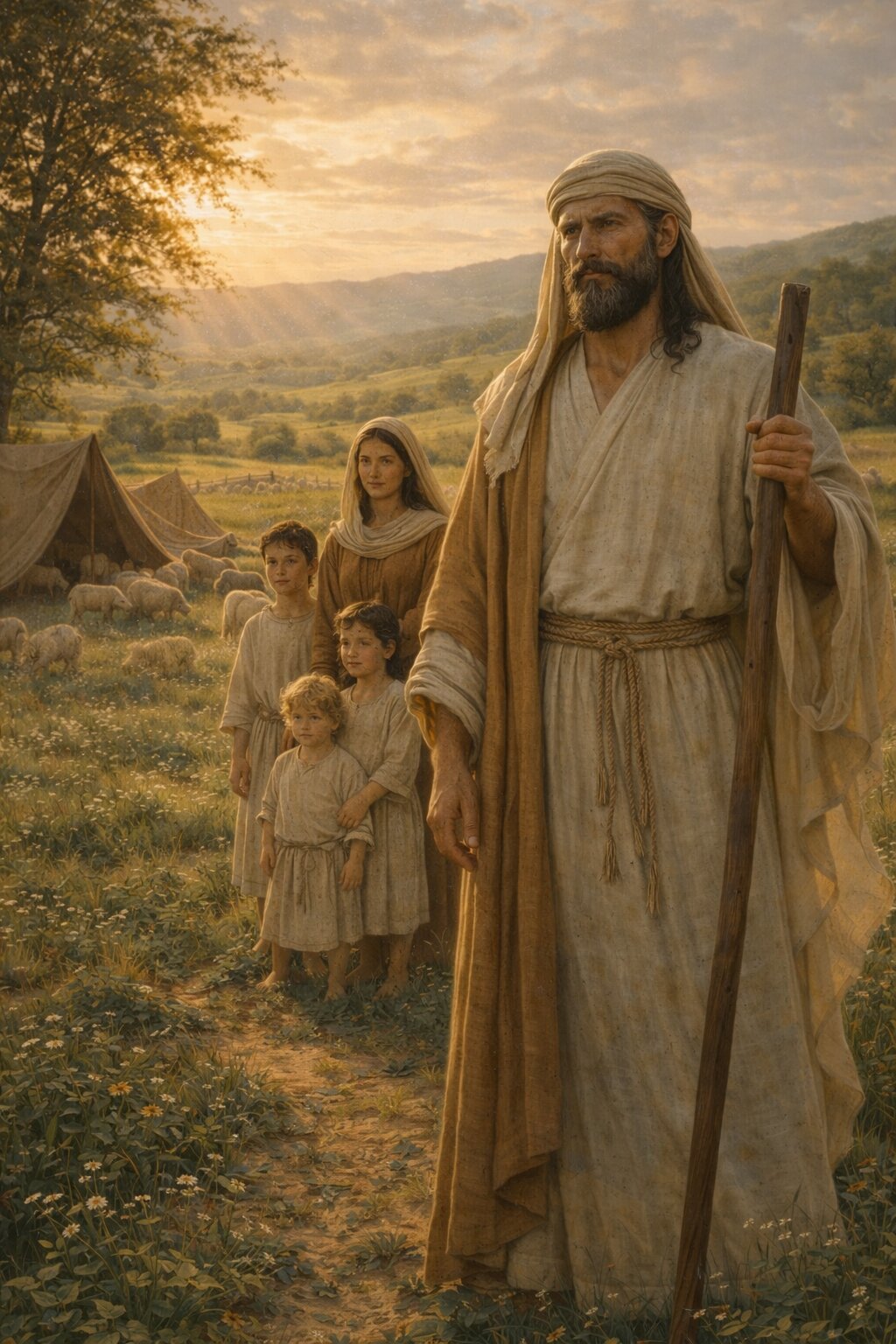
The patriarchs and their families continued to live the Order while those around them rejected it.
As the world grew increasingly violent and wicked the righteous drew closer to God.
Enoch walked with God. Noah spoke with God and was chosen to build an Ark and live through the flood. Shem followed in the ways of Noah and was later called Melchizedek, Prince of Peace. Abraham came into the presence of God several times. Jacob wrestled God and spoke with Him face to face.
These are not isolated stories. They show that the Order of Adam remained alive among the patriarchs, and that families who lived this way could still come into the presence of God.
So for some 2,500 years, the righteous posterity of Adam worshiped as families before God. The fathers taught their households, offered sacrifice at altars, remembered the coming Messiah, and sought God's presence.
What happened when that pattern met the might of Egypt is the next part of the story.