
The Messiah stood at the center of the plan God gave to Adam from the beginning.
From Adam onward, one of the ways God's people worshiped at the altar was to offer a lamb without blemish in remembrance of the promised Messiah.
For the first 2,500 years that offering was administered by fathers.
For the next 1,500 years it was administered by priests.
When the Messiah came, the children of Israel had divided into several sects and factions, each with their own interpretation of the law and their own idea of what the Messiah would be.
The prophets had spoken of a coming king who would reign in peace and whose government would have no end. They had also spoken of one who would come with no outward glory, despised and rejected. Most could not see how both would be true.
So when Jesus of Nazareth came, many did not have eyes to see nor ears to hear. However every one of the Messiah's followers in His lifetime was an Israelite.
The Messiah did the Father's will, spoke the Father's words, and proclaimed the Kingdom of God.
He came to reveal the Father, not to replace Him.
He taught the same order God had given from the beginning and showed how it leads the children of God back to the Father.
He was the promised Messiah. He was slain to save us from our sins, overcome death, and bring the children of God back to the Father.
About 2,000 years before the Messiah came in the flesh, Melchizedek met Abraham with bread and wine. This was a sacred act from the older order. The bread represented the plan God shared with Adam in Eden, and the wine represented the blood of the Son.
At the Last Supper, the Messiah gave this again to His followers, to impress upon them that through worshiping the Father as he had shown them and through the blood he would spill they can be one with him and the Father. They did not need priests or grand temples made with stones cut by man.
To receive the Messiah rightly is to let Him lead us to worship the Father.
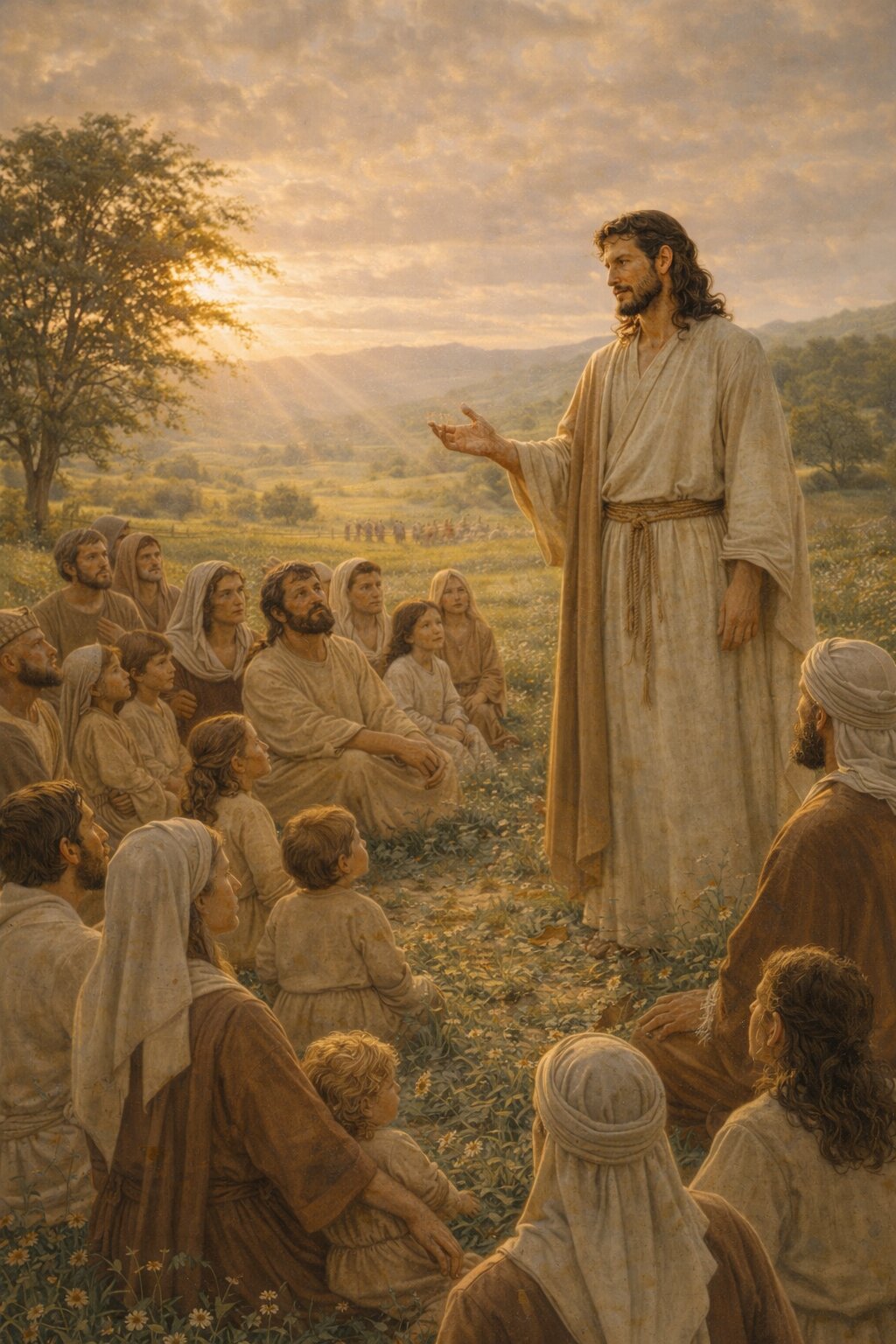
Many of the Israelites who followed the Messiah’s teachings worshiped as families and ordered their lives around worship, covenant, and the care of one another, just as Adam had taught.
Many died as martyrs to uphold their belief in God and the Messiah.
As these teachings spread throughout the Roman world, things began to change. Leaders, councils, and sacred offices once again began to stand between families and God.
Around AD 300, the Church of the Roman Empire came into being, the same pattern that had replaced the Order of Adam in every age.
Appointed leaders and a sacred class administered to families that were not their own. Men were doing for other households what God had given fathers to do in their own homes.
Just as Cain’s cities had done, just as Egypt and Mesopotamia had done, and just as the Levitical system had done, the pattern repeated.
For the next 700 or so years, Rome administered a state religion. Then, around AD 1000, after centuries of tension, the Great Schism took place, and the Roman Catholic Church and the Eastern Orthodox Church emerged.
Since then, the divisions have continued, and each new branch has tended to establish another institution.
I want to be careful here, because many wonderful people loved God inside those churches. They prayed, sacrificed, served the poor, preserved scripture, taught their children, and gave their lives for the Messiah as they understood Him. God was not absent from them. He blessed every sincere soul who reached for Him. The concern is not with those good people, but with the pattern that grew around them, where offices, councils, and sacred classes began to do for families what God had first given fathers and mothers to live before Him.
Through all of this the Order of Adam was never extinguished. God still found men and women who wanted to know Him personally, and He taught them in the old way.
They moved through the institutions of their day and beyond them. What that means for us now is the last part of the story.