
From the time of Adam there was talk about the coming Messiah. He would be the Savior and Redeemer. He would lead people unto God the Father. Abel's offering was in remembrance of the coming Messiah, as were all the offerings by patriarchs who offered a lamb without blemish on the altar. After four thousand years, He came.
Isaiah was privileged to record some of the most prophetic words about the Savior. Even though the scripture was written and preserved, the leaders of the several Israelite sects would teach of a different Messiah.
It is believed that there were several groups: Pharisees, who were religious teachers of the people; Sadducees, who were temple priests and elites; Essenes, a separated holy community; Zealots, political revolutionaries; Scribes, scholars and interpreters of the Law, often aligned with the Pharisees; Herodians, political supporters of Herod and Roman rule; Samaritans, a related people with their own temple and version of the Law, separate from mainstream Israel; Disciples of John the Baptist, a repentance-focused movement preparing for the Messiah; and the common Israelites, the general population, influenced by the above groups however not formally part of a sect. In different degrees they generally believed that the Messiah would free them from the military and political rule of Rome. With good reason, for Isaiah said in chapter 9:
6–7 For unto us a child is born, unto us a son is given: and the government shall be upon his shoulder: and his name shall be called Wonderful, Counsellor, The mighty God, The everlasting Father, The Prince of Peace. Of the increase of his government and peace there shall be no end, upon the throne of David, and upon his kingdom, to order it, and to establish it with judgment and with justice from henceforth even for ever. The zeal of the LORD of hosts will perform this.
This will come true at His second coming. His first coming Isaiah also explained in chapter 53:
2–3 He hath no form nor comeliness; and when we shall see him, there is no beauty that we should desire him. He is despised and rejected of men… and we hid as it were our faces from him.
While the leaders led the charge against Jesus of Nazareth, there were many Israelites who also did not have eyes to see nor ears to hear. Also important to realise that all of the Messiah's followers in his lifetime were Israelites.
The Messiah did not set up an institutional religion. He did not organize any group to rival any of the Israelite sects. He taught the truth. He taught the Order of Adam. He was the Messiah that was promised. He would be slain so He may save us from our sins and unlock death and hell. The Order of Adam, as always, centered in loving God and our fellow man. Family worship and stewardship and the recognition of the Messiah being the firstborn Son of God who would redeem us and bring us back to the Father. The Messiah does not want us to worship Him. He wants us to worship the Father. He continued to teach that.
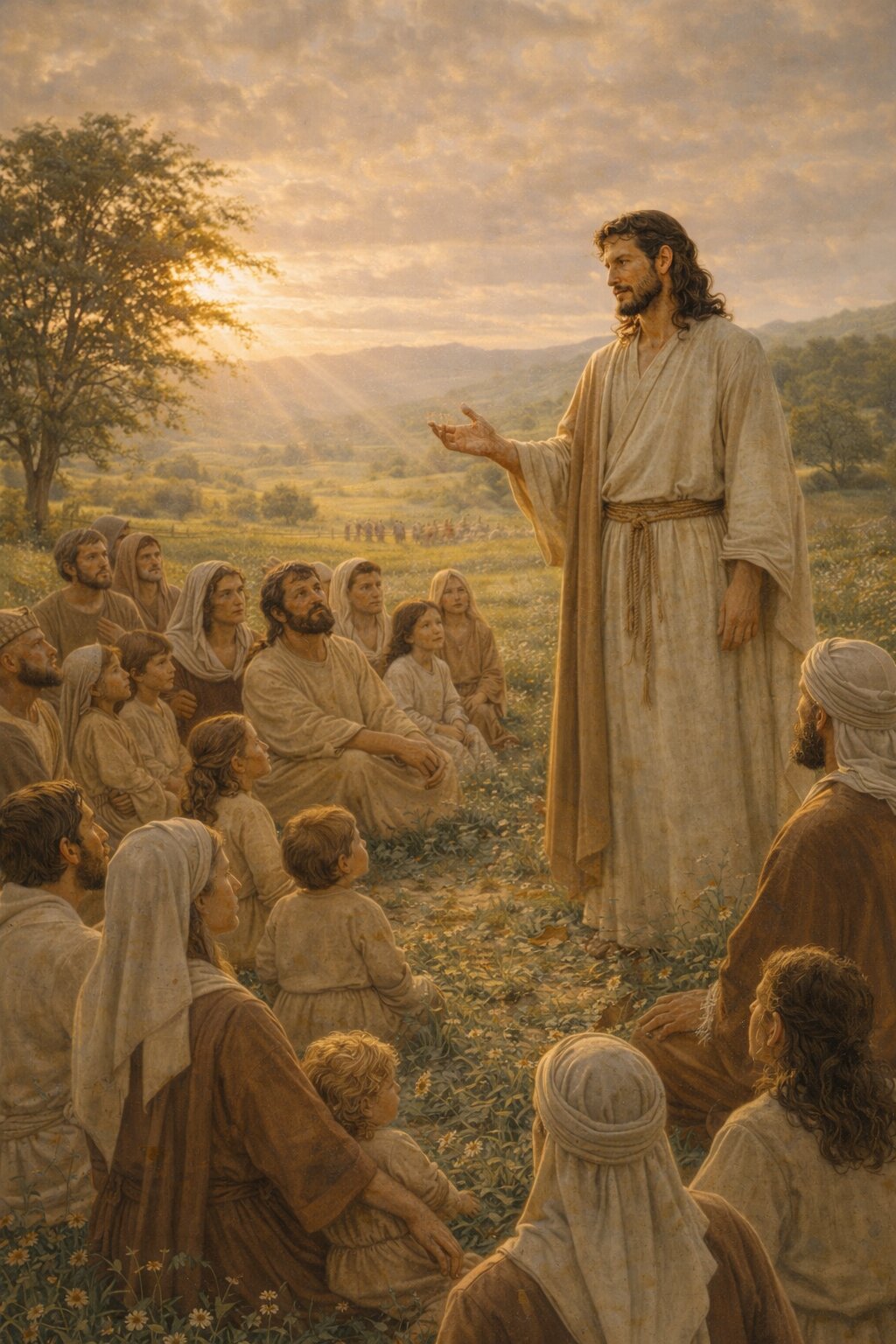
Many of the Christians who followed the Savior's teaching worshipped as families. They followed Adam's way, which was to have the land shared among their family, lives ordered around worship and instruction, and work rooted in care for the earth and its creatures. Many died as martyrs to uphold their belief in God and the Messiah.
As Christians spread through the Roman world, structure accumulated around them. Constantine extended legal protection to Christians in 313 AD. The Council of Nicaea in 325 AD drew the church into formal doctrinal settlement. The institutionalization that followed brought the movement into the same pattern that had replaced the Order of Adam once before, with appointed leaders and a sacred class administering to families they had no family ties to.
The Roman Catholic and Eastern Orthodox traditions share that history up to 1054 AD, when the formal split between them came. Since then the splits have continued and each new branch has continued to establish a more organized institutional religion.
Through all of this the Order of Adam was never extinguished. God continued to raise up men and women who sought Him in the old way and found Him, moving through the institutions of their day and beyond them to the same direct encounter the patriarchs had known.