A Personal Invitation
My Journey
How I came to the ancient way—and why I'm sharing it with you.
The Search
I was born in 1963 in Australia, the middle child of five in a middle-class Catholic family. My parents attended church at Christmas, Easter, christenings, weddings, and funerals—but faith was more cultural than consuming. I went to Catholic schools until I was about eleven, then stopped attending church altogether.
At sixteen, something shifted. There was nothing dramatic—no crisis, no tragedy. Just a growing awareness of the world's inequities that I couldn't reconcile. I had grown up in relative peace and comfort, yet I knew that others, in other places and other times, had faced horrors I could barely imagine. The wars. The famines. The injustices that seemed woven into human history. I looked at my quiet Australian life and wondered: Why me here, and them there? What is the purpose of any of this?
I turned to God. I prayed the best I knew how—which wasn't very well—and asked for guidance. Nothing came. Or so I thought at the time.
Two years later, at eighteen, I was introduced to a church. Not the Catholic faith of my childhood, but something new. My parents, though not practicing, held firmly to the idea that you are born Catholic and die Catholic. There is no leaving. But I was eighteen now, old enough to choose for myself. Looking back, I believe God arranged the timing. He waited until I could not be stopped.
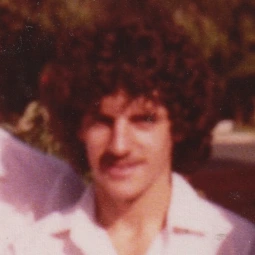
Baptism day, 1982
I devoted myself to this new faith completely. I studied the doctrines, served in the church, and for the first time in my life, I wanted to read. The scriptures came alive. I married young, and over the years my wife and I had seven children. Life was full—full of service, full of family, full of seeking God.
And through it all, even in seasons of poverty, I saw His hand. There was always a roof over our heads. Always food on the table. I witnessed my children healed from sickness through the power of prayer. I received direct answers, unmistakable guidance. The more I gave, the more heaven seemed to pour out.
The more I learned about God, the more I wanted to know Him.
The Narrowing
For nearly forty years, I was an avid student of the gospel. At first, I read everything—every scholar, every commentary, every book I could find. But over time, I began to notice something troubling.
The scholars disagreed with each other. Not just on minor points, but on fundamental doctrines. Contemporary thinkers contradicted those who came before them. I thought perhaps the problem was that I was reading too broadly, so I narrowed my focus to the writings of church leaders—men in positions of authority, both living and dead.
The same pattern emerged. They too contradicted one another, even while insisting that doctrine never changes and that God is the same yesterday, today, and forever. They justified themselves, but I could see the inconsistencies.
So I narrowed further. Fewer and fewer sources. Eventually, the circle closed until only the scriptures remained.
And something remarkable happened. As I studied the scriptures alone, praying for understanding, God began to enlighten my mind. I started to see a continuity I had never noticed before—threads running from Genesis through the prophets, through the Messiah, through the apostles. A pattern. An order.
I began to write down what I was learning. My own understanding. My own revelations.
But even as my personal clarity grew, I noticed something else: among the members of my own church, hardly anyone believed the same things. We used the same words, attended the same meetings, but when you pressed beneath the surface, there was no unity. Everyone had constructed their own version of the faith.
I followed a few teachers online who seemed to have spiritual depth. But over time, their fruits didn't match what I understood from scripture and revelation. One by one, I set them aside.
Eventually, it was just me, the scriptures, and God.
The Breaking
My first marriage was difficult from the beginning. I believed it would get better. I had been promised—years earlier, in a blessing—that I would have joy in my children with my wife. I held onto that promise through decades of pain.
But what I witnessed was not joy. I watched my wife fight with our children. I felt the weight of conflict that never resolved, wounds that never healed. I did not believe in divorce. I had committed my life to this marriage, and I was determined to endure.
Then, after years of struggle, God spoke to me. Not in ambiguity. Not in gentle suggestion. A clear voice, words I can still hear today:
"Divorce is an option."
I was shocked. This was not what I expected God to say. But over the following months, He confirmed it again and again—through strangers, friends, and leaders. Each time the message came, the Spirit bore witness to my heart. One friend later had no memory of telling me that divorce was an option, though I remembered the moment clearly. It took five years from that first revelation before I finally acted. I spent years in therapy, before and after, trying to heal. Trying to understand what had happened and how to move forward.
I was not looking for another marriage. At church events, there were often ten women for every man, but I was clear with everyone: I wanted to help people live the gospel. I was not ready for marriage. I thought I would need five years just to heal.
Then I met Candace.
She was twenty years younger than me. Never married. A devout follower of Christ. When we met, there was an instant connection—not romantic at first, but something deeper. A recognition. We became friends.
Over time, through prayer and revelation, we both came to understand that God intended us to marry. Once we wrapped our minds around it, we were overjoyed. And during that time, after offering prayer, I received words I will never forget:
"Candace is a gift to you for your faithfulness in serving Me through all the difficult times of your previous marriage."
It has now been twelve years. Candace became a mother to my seven children and a grandmother to theirs, and together we have five children of our own. We have joy together in them—the very joy I was promised so long ago. I know what I have now because I lived the opposite for so long. This marriage is what God intended from the beginning. He simply had to prepare both of us to receive it.
The Unveiling
About four years before we left our church, I remember kneeling in prayer one night and pleading with God for a vision.
I had studied and prayed for forty years. I had followed the promptings of the Spirit. I had experienced miracles. And yet—the truth still felt unclear. Different Bibles contradicted each other. Ministers and churches taught opposing doctrines. The more I tried to establish what the doctrines of God actually were, the more contradictions I found.
I wanted certainty. I wanted to see.
No vision came.
But dreams began to come. Vivid dreams. I started writing them down, praying for interpretation. And something shifted. God began leading me—to people, to teachings, to books—each one building on the last. This was the hinge point.
Then came the prophets.
I felt led to study Ezekiel, Jeremiah, Micah, Hosea, Elijah, and Isaiah. Not casually, but deeply. I would read as much as I felt prompted to, then ask God: "What revelation do you want me to know?" And I would write what I received.
Again and again, He revealed the same thing: apostasy. Not just ancient apostasy among the children of Israel—but its echo in the present. The corruption I was reading about in scripture, God told me in no uncertain terms, was in my church today.
I pushed back. "I understand," I said. "I get it. There is an apostasy." But He kept revealing more. For months, He continued to show me the pattern—how Israel's religious and political leaders had strayed, how the people had been led away from the pure path, and how this same pattern was playing out now.
And then something unexpected happened.
I began to feel a deeper love for all religions than I had ever felt before.
This might sound strange. You would think that seeing corruption everywhere would breed cynicism. But God showed me something else: that in every religion, there are good people—members and leaders alike—who are genuinely devoted to Him. They are doing their best with what they have been given. Before this experience, I had quietly believed that other faiths were led astray while mine held the truth. Now I understood that all churches are in the same condition. Some preserve more of the original pattern than others. Some have strayed further. But none of them hold the fulness.
This was not a reason to despair. It was a reason to seek what existed before any of them—the original. The ancient way.
For I came to understand something else: God works patiently with His children through the traditions and institutions they are able to receive. Across the world, religious communities—despite their limitations and imperfections—serve as instruments of preparation. They introduce souls to reverence for the divine, to sacred writings, to moral discipline, and to lives ordered around faith. They gather people into communities where belief can be nurtured, conscience awakened, and hearts softened toward God. In this way, these religions and churches function as tutors, preparing God's children—often unknowingly—for the higher laws and deeper union that heaven ultimately intends.
But preparation, by its nature, points to something more.
It is only through the Messiah—or whatever name you give Him in your tradition—and through His teachings, that one can come to know God. And it is in the Order of Adam that His children can become one with Him.
The Ancient Order
During this same period, even as God was revealing the apostasy, He was teaching me something else. He began to show me principles and practices that I didn't have a name for at the time. A pattern of priesthood that wasn't dependent on church hierarchy. Ordinances that predated Moses. A way of worship that belonged to families, not institutions.
Only later did I learn what to call it: the Order of Adam.
From the beginning, God established His way on earth through Adam. Adam didn't invent religion. He received it—directly from God. He was anointed as prophet, priest, and king over his family. Not king over nations. Not priest over strangers. Prophet, priest, and king for his household—to teach them, to administer sacred ordinances, to lead them back into God's presence.
This is the pattern that Abel followed when he offered an acceptable sacrifice. He wasn't improvising. He was doing what his father had taught him, which was what God had taught Adam. Cain offered too, but not according to the revealed order. He retained fragments of the truth but corrupted them. This was the first apostasy.
The pattern repeated throughout scripture. God would raise up a righteous patriarch—Seth, Enoch, Noah, Abraham—and the ancient order would be restored. Then corruption would creep in, the people would imitate the nations around them, and the fulness would be lost again.
Consider Moses. He spent forty years in the wilderness raising his family under the patriarchal umbrella of Jethro, his father-in-law. Jethro was a descendant of Abraham, a high priest in the Order of Adam. As God always does, He taught Moses through someone close to him before revealing it to him directly. When Moses received his call to deliver Israel from Egypt, he was being prepared to restore this ancient order to an entire nation.
The scriptures explain how Moses was preparing the children of Israel to become a kingdom of priests forever. While he was on the mountain—walking on holy ground, in a temple, speaking with God face to face—the people below knew what Moses and God were preparing for them. But they could not wait. They turned back to the golden calf and the broken traditions they had learned in Egypt.
When Moses descended, it was revealed to him that they were not ready for the higher Order of Adam. They were given a lesser law instead—a schoolmaster to lead them unto the Messiah. If they could receive the Messiah, they would then be led unto the Father, which is the Order of Adam. But they would not fully accept Him. Neither would the gentiles who came after. And so the lesser law of churches prevailed, and the Order of Adam remained silent.
What I came to understand—through years of study, prayer, and revelation—is that this order still exists. It was never meant to be housed in an institution. It is above any church. It is the way God always intended for families to relate to Him: directly, through covenant, through ordinances administered by a father who holds the same priesthood Adam held.
About two years into this journey, God told me that He would lead me to people who would confirm what He was revealing. And He did. Over the next few years, I met others who had received similar teachings. I learned that what I was experiencing was not isolated—there is a growing number of people who are returning to the ancient way.
I have now been ordained to the same priesthood that Adam held. Not to preside over a congregation. Not to have authority over strangers. But to be a priest over my own family, to administer the same ordinances Adam administered, to lead my household in the covenant path that leads back to God.
Candace and I walked this journey together. As I studied and received revelation, I shared it with her. She prayed and received her own witness. When we finally stopped attending our church, it was a leap of faith—that community had been our social network for decades. But we knew we were being led.
The Perennial Witness
A few months ago, in the last quarter of 2025, I discovered something remarkable.
For years, I had understood through revelation that all religions stem from the true order taught to Adam and by Adam to his children. What I didn't know was that scholars in the twentieth century had independently arrived at the same conclusion through a completely different path.
They are called the Perennialists—thinkers like René Guénon, Ananda Coomaraswamy, and Frithjof Schuon. Through decades of studying sacred texts, symbols, and practices from cultures around the world, they found the same patterns appearing everywhere. The same cosmology. The same core teachings. The same ritual practices. In traditions separated by thousands of miles and thousands of years.
Their conclusion: there is one primordial tradition from which all authentic religions descend. What I had learned through prayer and revelation, they had documented through scholarship.
I don't share their writings as the foundation of what I believe. The foundation is scripture and revelation. But their work provides a remarkable witness—confirmation from an unexpected source that what God revealed to Adam did not simply vanish. Fragments of it survived, scattered across every civilization, embedded in every authentic spiritual tradition. The cross in Christianity. The sacred center in Native American traditions. The anointing rituals that persist from ancient Egypt to the coronation of modern kings. These are not coincidences. They are memories.
Every religion preserves something of the original. And every religion has also accumulated corruption. The task is not to blend them all together—that produces only confusion. The task is to return to the source.

2025
Where I Stand
I am still on this journey. I am still learning. I am still seeking to align myself with God that I may come to know Him through His Son, Jesus Christ, the Messiah.
But I have learned enough to know that this way works.
Not all of my children have followed this path. Some of my older children disagree with me. This is life. Each person must choose for themselves. There is no duress, no force, no compulsion, no manipulation in God's ways—nor in the Order of Adam. God invites, and He is always ready to receive any of His children when they turn to Him. But He does not change what He knows to be true so that He can fit in with His children. He waits. He loves. And He remains constant.
My family—those who have chosen this path with me—is being transformed. Our home is becoming something sacred—not through programs or institutions, but through the ancient pattern of family worship. Prayer. Revelation. Covenant. The feasts. The ordinances. The same practices that Adam taught his children, that Noah preserved through the flood, that Abraham passed to his sons.
I know there are others on similar paths. People who have sensed that something is missing in institutional religion. People who have watched churches multiply programs while producing fewer disciples. People who have grown disillusioned with leaders but have not lost faith in God.
If that is you, I want you to know: there is another way.
It is not a new church. It is not an organization asking for your membership or your money. It is a return to the original pattern—the order of Adam, the ancient way of the patriarchs.
The destination is not religious observance for its own sake. The destination is to know God—truly know Him, and His Son. To walk with Them. To speak with Them. To become like Them.
This is eternal life.
An Invitation
If what you have read here resonates with something in your soul—if you feel drawn to the ancient way—I would be glad to hear from you.
— Joseph
Connect With Me